

The Korean entertainment industry has experienced one of its most turbulent first halves of the year, with a series of high-profile scandals dominating headlines. From AI-generated misinformation and celebrity tax investigations to dating show controversies and social media reactions, numerous incidents have shaken public trust.
Among the top stories were the legal battle between Kim Soo Hyun and Kim Se Ui, CEO of the Garo Sero Institute, a wave of tax investigations involving major celebrities, repeated controversies over dating show contestants, social media scandals involving public figures, and the wine substitution incident at chef Ahn Sung Jae’s Michelin-starred restaurant, Mosu.
Using Google’s Gemini model, Korean media analyzed the public impact, online discussion and overall influence of each case to compile a list of the five most talked about entertainment controversies of the first half of 2026.
The AI ranked the celebrity tax investigation as the biggest entertainment controversy of the year. Actors including Cha Eun Woo, Kim Seon Ho, Yoo Yeon Seok, Lee Min Ki, Lee Yi Kyung and Ji Chang Wook have all reportedly received tax revaluation notices ranging from billions to tens of billions of Korean won.
Among them, Cha Eun Woo attracted the most attention after reports revealed that he had received a tax revaluation initially estimated at around ₩20 billion. Tax authorities determined that a company formed under his mother’s name had been used in connection with his entertainment income.
According to the investigation, the company had signed service contracts related to Cha Eun Woo’s businesses, with the profits distributed between Fantagio, the company and the actor himself. Authorities concluded that the company operated more like a paper company than a legitimate entertainment management agency, allowing income to be taxed at corporate rates rather than higher personal income tax rates.
The controversy intensified after reports linked the company to an eel restaurant run by Cha Eun Woo’s mother, a restaurant that the actor himself had previously recommended as one of his favorite dining spots.
About three months after the reports came out, Cha Eun Woo paid his reassessed taxes. The final amount was reportedly around ₩13 billion after adjustments.
Kim Seon Ho, another Fantagio actor, also faced scrutiny over his one-man agency, which allegedly employed family members and managed business expenses in ways that raised questions during a tax audit. Fantagio described the situation as administrative inexperience, stating that the taxes owed had been paid and that the company had subsequently been dissolved.

Meanwhile, Ji Chang Wook reportedly underwent a special tax audit in June that resulted in a revaluation worth billions of won. His agency stressed that the disagreement stemmed from different interpretations of tax law regarding whether certain entertainment income should belong to him personally or to his company, noting that he has consistently met his tax obligations since his debut in 2008.
The AI explained that this controversy was top of mind because it damaged public trust in tax fairness. He argued that the use of individual agencies and paper companies to reduce the tax burden created a strong sense of injustice among ordinary taxpayers.
Regarding Cha Eun Woo in particular, the AI noted that the alleged use of a company under his mother’s name gave the impression of a deliberate distribution of income. Although his agency denied any intentional tax evasion, the sheer size of the reassessed amount shocked the public.
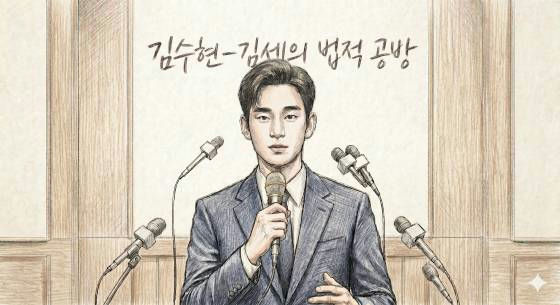
The AI placed the ongoing legal dispute between Kim Soo Hyun and Kim Se Ui, CEO of the Garo Sero Institute, in second place.
Since last year, Kim Se Ui has repeatedly claimed through Garo Sero Institute broadcasts that Kim Soo Hyun dated the late actress Kim Sae Ron while she was still a minor and was responsible for her death. He also held press conferences on behalf of Kim Sae Ron’s family, presenting what he said were voice recordings and KakaoTalk conversations involving the actor.
However, investigators later concluded that the audio recording had been generated using AI technology and that the KakaoTalk messages had also been manipulated. Police subsequently called for Kim Se Ui’s arrest on charges including defamation, intimidation, attempted coercion and violating laws relating to sexual violence.

The court approved the arrest warrant after determining that there was a risk of evidence tampering and escape, which would lead to Kim Se Ui’s detention pending trial.
Gemini ranked the case second because it represented one of the most alarming examples of AI-generated misinformation weaponized against a public figure. According to the AI, the case went beyond celebrity gossip and demonstrated how artificial intelligence can be used to destroy reputations through false evidence.
The controversy continues to have legal consequences for Kim Soo Hyun. Health supplement company FromBio has filed a ₩3.9 billion damages lawsuit against him, claiming the allegations have damaged its brand image. Kim Soo Hyun has denied any responsibility, claiming that the allegations against him are false.

Despite the ongoing legal battle, Kim Soo Hyun is expected to resume activities in July, starting with an advertising photoshoot for Philippine fashion brand BENCH.
Third place went to the series of personal scandals involving Korean reality show contestants.
Several participants from different programs have been implicated in allegations involving extramarital affairs, hidden divorce proceedings and deceitful behavior before or during filming.

A contestant on SBS’s matchmaking program has been accused of concealing a previous court ruling ordering compensation in an affair-related case. Producers ultimately removed much of the contestant’s footage, although the individual denied the allegations and announced plans for legal action.
Most recently, a participant on Channel A’s Heart Signal 5 was accused of being involved in a civil suit related to an extramarital affair while maintaining an inappropriate relationship during production. Although the production team said it was verifying the claims, the contestant continued to appear on the program without significant changes.
Another controversy emerged from ENA and SBS Plus’ I Am Solo, where a participant was accused of falsely claiming to have completed an amicable divorce despite ongoing legal proceedings.
According to AI’s analysis, these scandals have severely damaged the credibility of dating shows, the success of which largely depends on viewers’ belief that contestants are genuine. He also criticized the production teams for not conducting adequate background checks.
The fourth biggest controversy involved chef Ahn Sung Jae and his Michelin-starred restaurant, Mosu.
In April, a customer said the restaurant served a less valuable 2005 vintage wine instead of the advertised 2000 vintage during a premium wine pairing experience. Mosu apologized for the misunderstanding, acknowledging that staff failed to provide adequate explanations.
Ahn Sung Jae also publicly apologized, promising greater oversight as chef-owner. However, criticism intensified after a new YouTube video appeared on his official channel on the same day the apology was issued, prompting viewers to question the sincerity of his response. Its production team subsequently announced a temporary suspension of uploads.
According to the AI, the controversy has highlighted the gap between the perfectionist image associated with Michelin-starred restaurants and the reality of customer service failures. The bottom line is that consumers paying premium prices expect complete trust and transparency, making the incident particularly damaging.
The fifth and final entry on the AI’s list centered on repeated social media controversies involving celebrities and influencers.

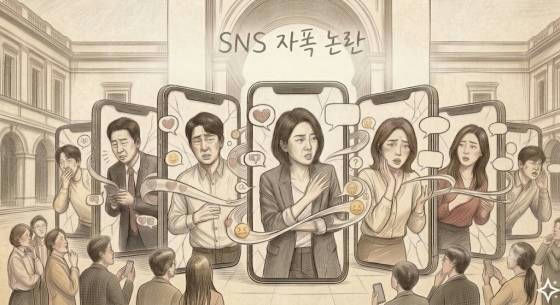
Travel creator Kwak Tube has come under fire after revealing that he and his wife, a civil servant, stayed at an expensive sponsored postpartum care center, raising questions about potential violations of Korea’s anti-graft law. She later donated ₩30 million to support single mothers.
Actress Ki Eun Se also drew backlash after posting comments about wanting “a warmer world” following complaints from neighbors about construction-related disturbances near her home, with many interpreting her response as dismissive.
Actress Kim Bin Woo came under fire after responding to complaints about noisy late-night TikTok live streams, insisting that living on the first floor meant the noise shouldn’t matter.
Broadcaster Ahn Sun Young also apologized after publicly complaining that she had been denied entry to an IELTS exam because she arrived after the official cut-off time, a response many saw as unreasonable given the clearly established rules.
Gemini concluded that these incidents reflected a larger problem of celebrities displaying entitlement and poor judgment on social media. He noted that the repeated cut-and-paste apologetic statements issued only after the backlash left the public increasingly jaded.
According to the AI, while social media offers celebrities effective tools to communicate with fans, it also requires greater responsibility. Public figures who fail to consider the broader impact of their actions risk permanently damaging the trust that helped build their careers.
Sources: Daum